DIY 10 Inch Subwoofer
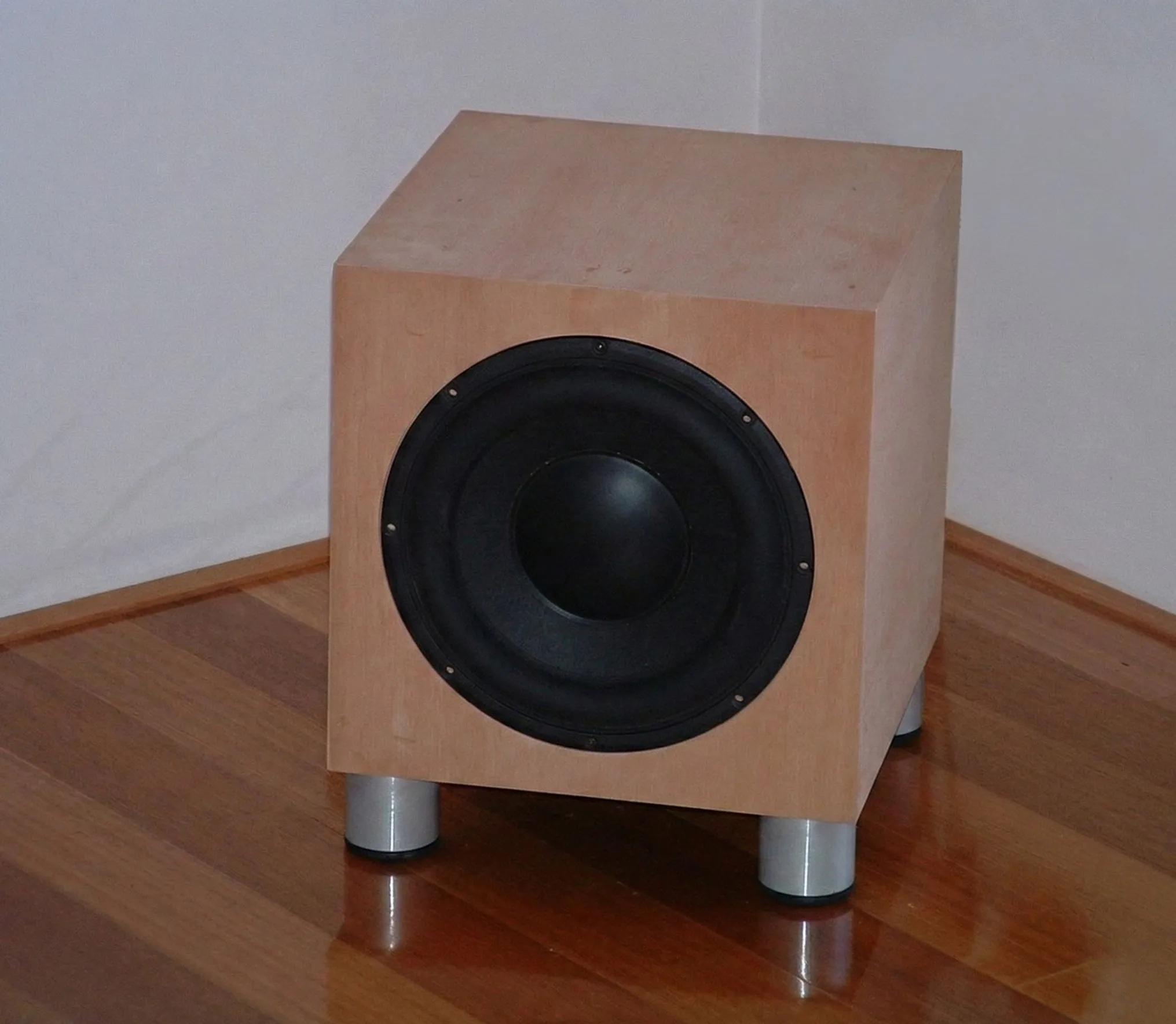
Overview
This project is a passive-radiator subwoofer built around the Peerless by Tymphany XLS-P830452 — a 10″, 4 Ω XLS-series subwoofer driver. The driver datasheet is available from Loudspeaker Database (PDF).
Peerless catalog brochure (NP, 2002): Peerless_Brochure_NP_2002.pdf.
Active driver — key specifications
Summary values below match the Loudspeaker Database listing and the linked PDF; use the datasheet for full curves and tolerances.
| Parameter | Value |
|---|---|
| Nominal diameter | 10″ / 254 mm |
| Impedance | 4 Ω |
| Resonance fs | 25 Hz |
| Total Qts | 0.29 |
| Equivalent volume Vas | 60.3 L |
| Linear excursion xmax (one-way) | 15.2 mm |
| Sensitivity (1 W, 1 m) | 84.7 dB |
Passive radiator pairing
This box uses a passive radiator instead of a port so the enclosure can be tuned low in a practical cabinet height: a reflex port that reaches the same tuning in this volume would need a long, folded duct (more build complexity and a bigger footprint). A PR gives you a second pistonic radiator with no port noise when the main driver is driven hard — useful with a long-excursion woofer like the XLS-P830452.
A passive radiator has no motor; its resonance is set mainly by moving mass and suspension, together with the trapped air in the box. Adding mass to the PR lowers its resonance so the box tuning (Fb) lands where the alignment needs it for this driver and internal volume — the same role as choosing port length in a vented design. Too little mass and the system tunes too high; too much drives the PR toward over-excursion, so mass is adjusted to hit both target tuning and safe PR stroke (check PR vs. driver excursion in simulation).
Build gallery
Click an image for a full-size lightbox (zoom / pan).
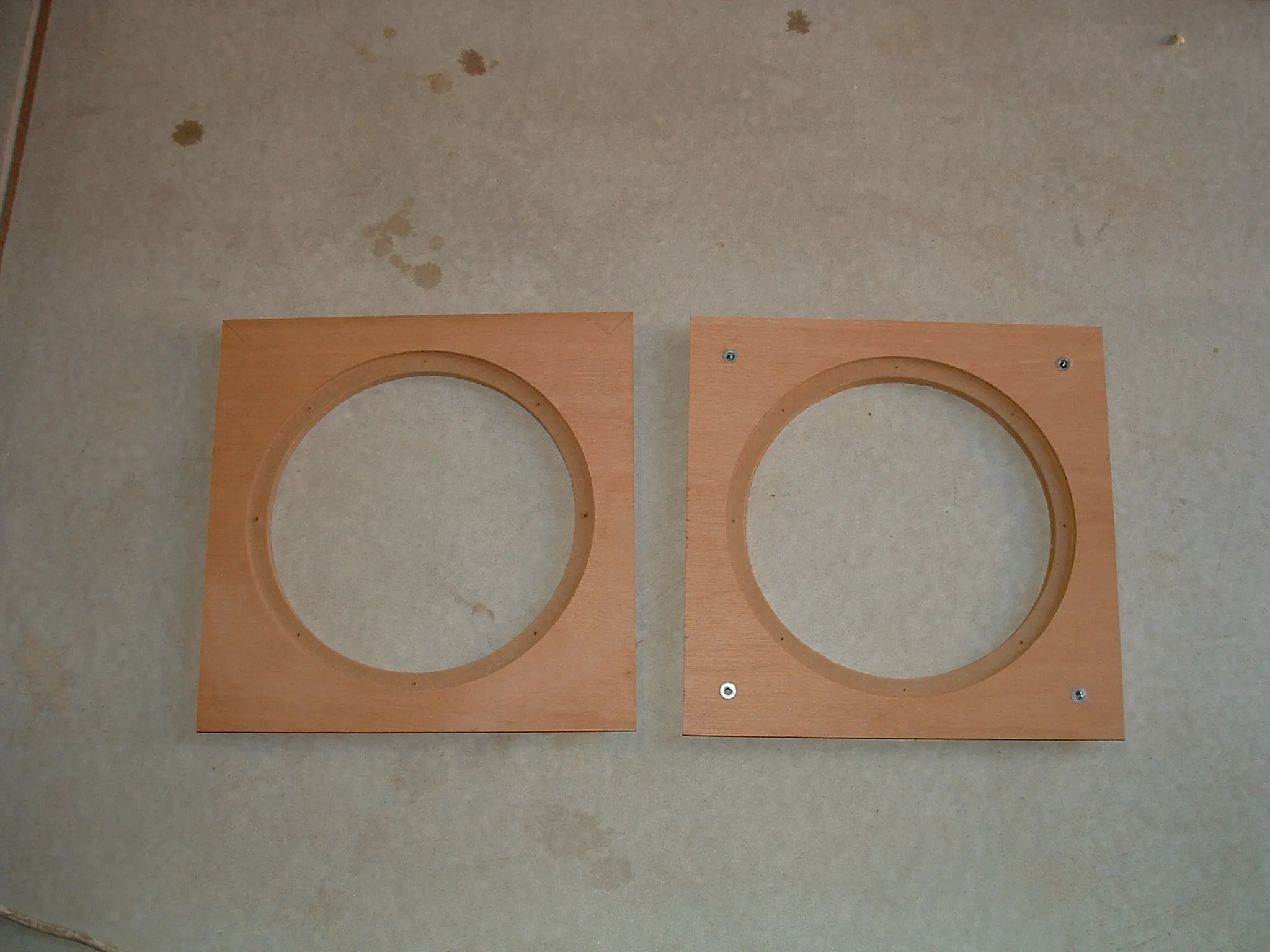
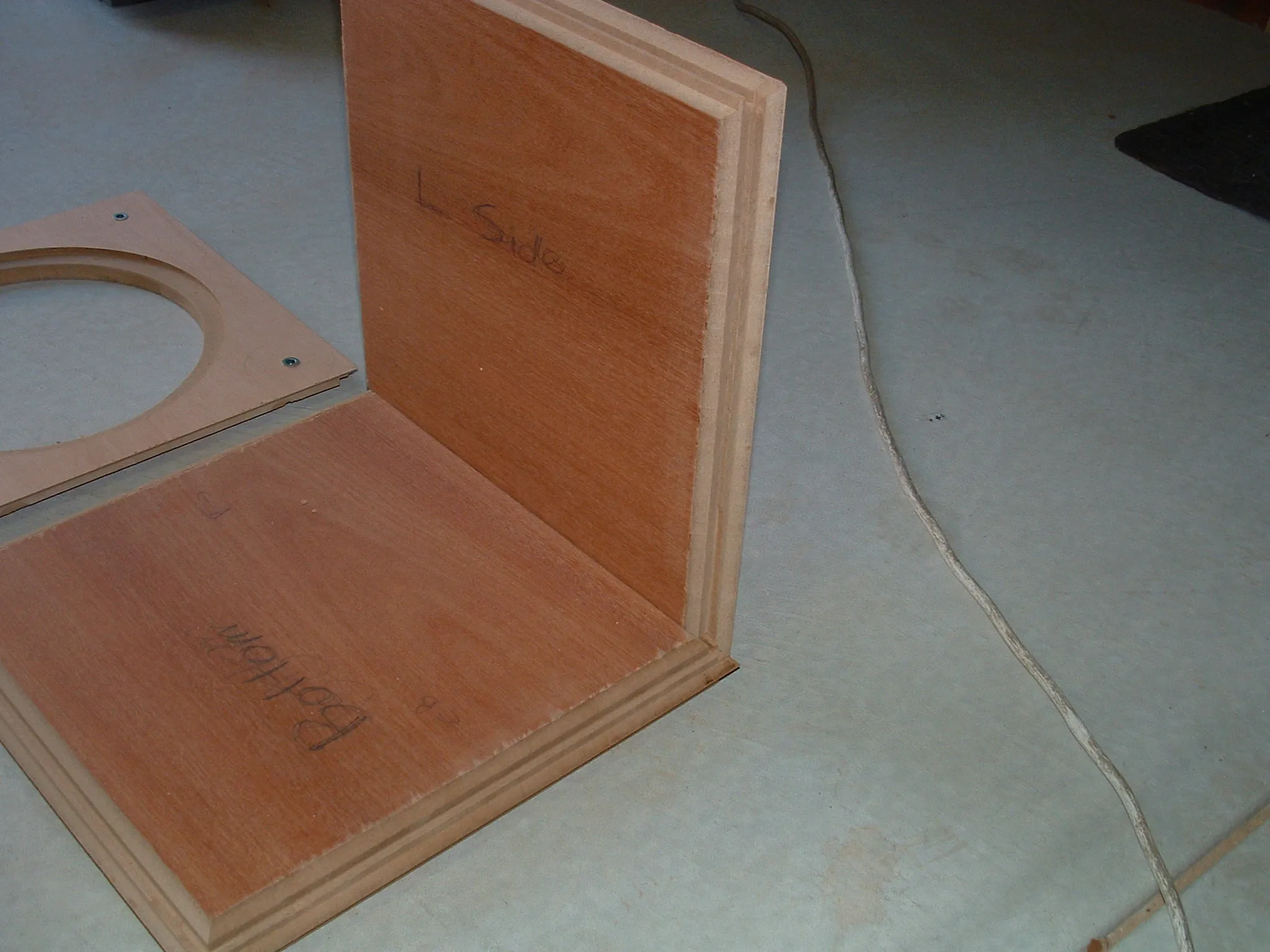
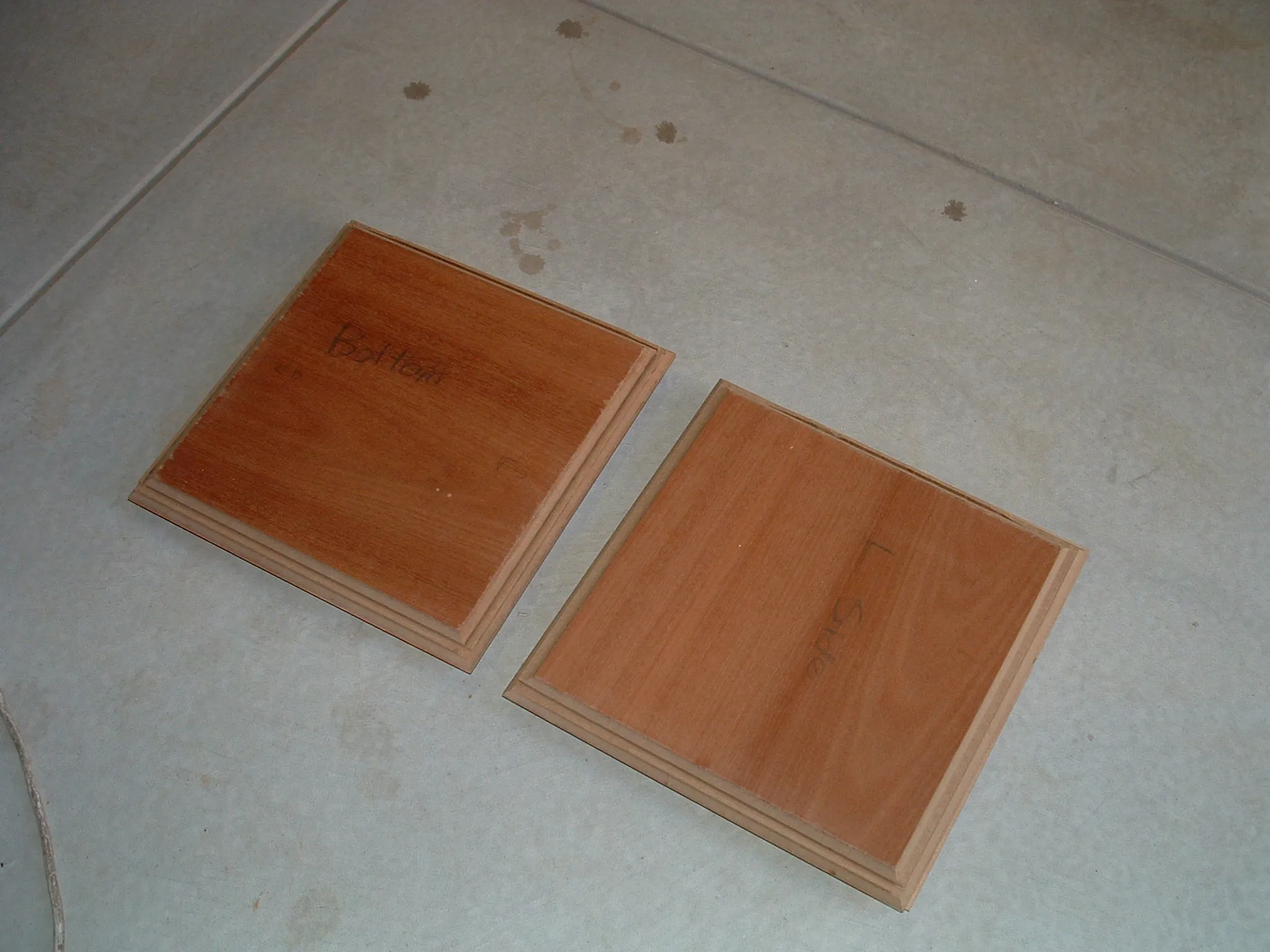
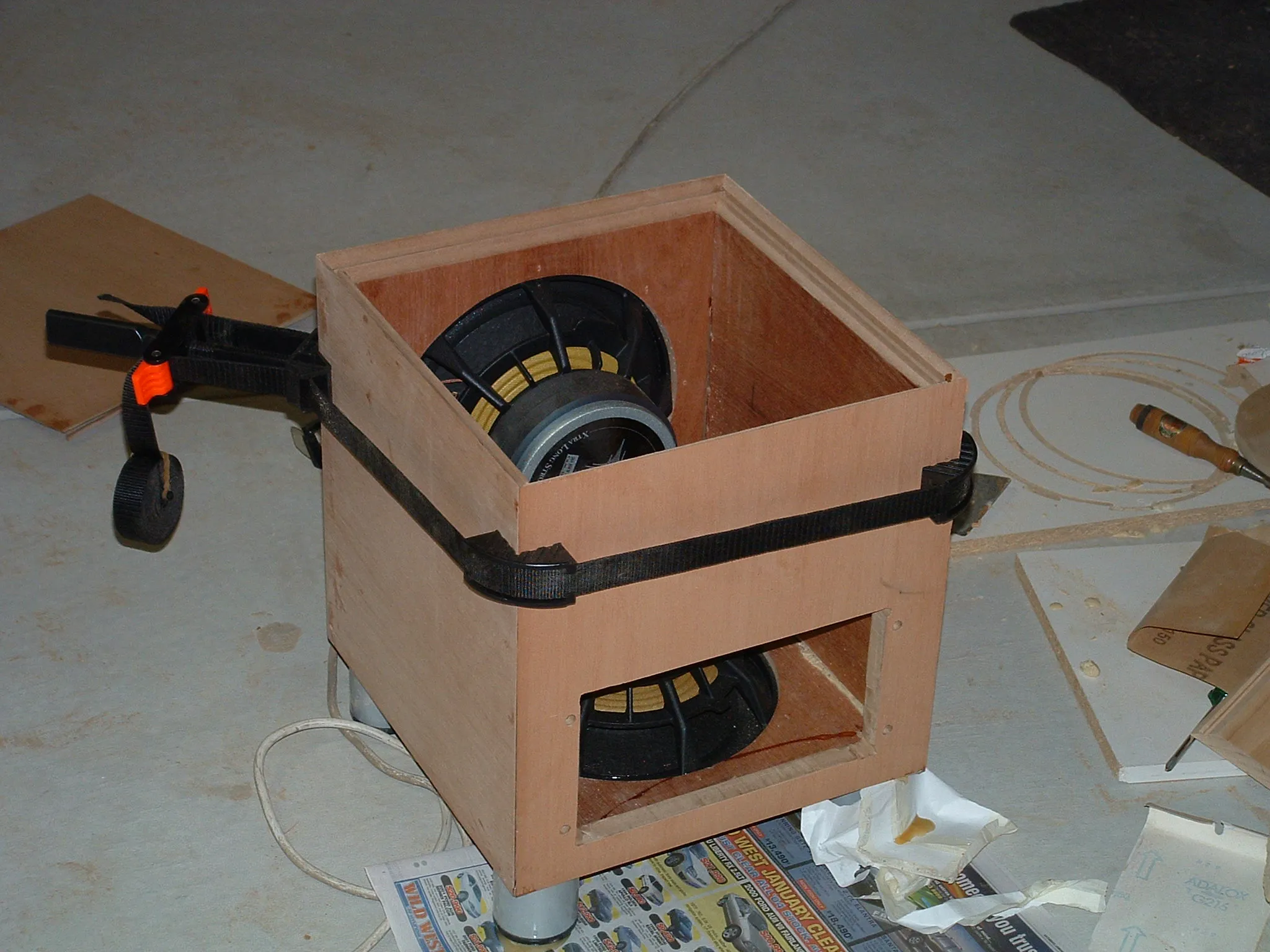
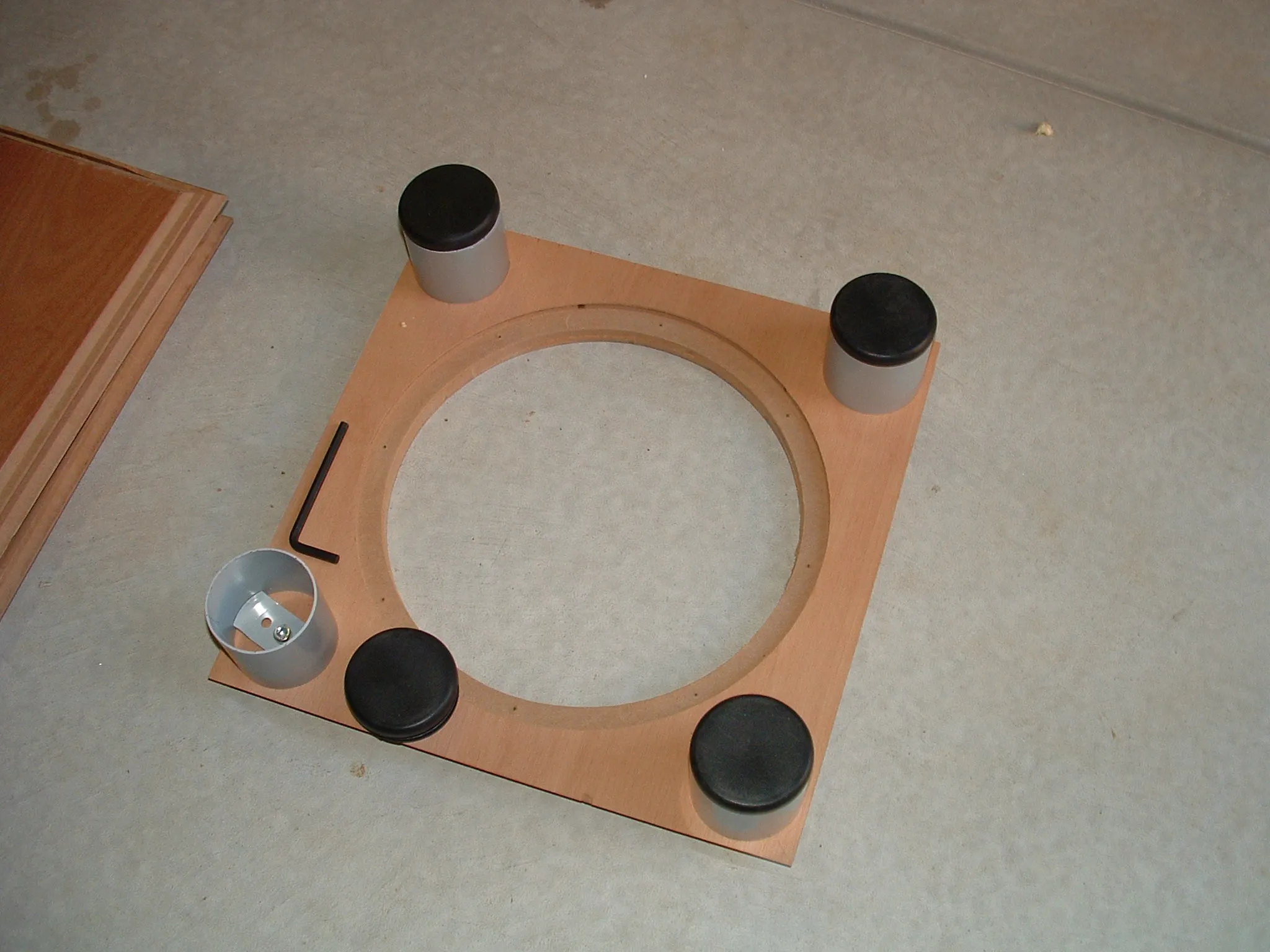
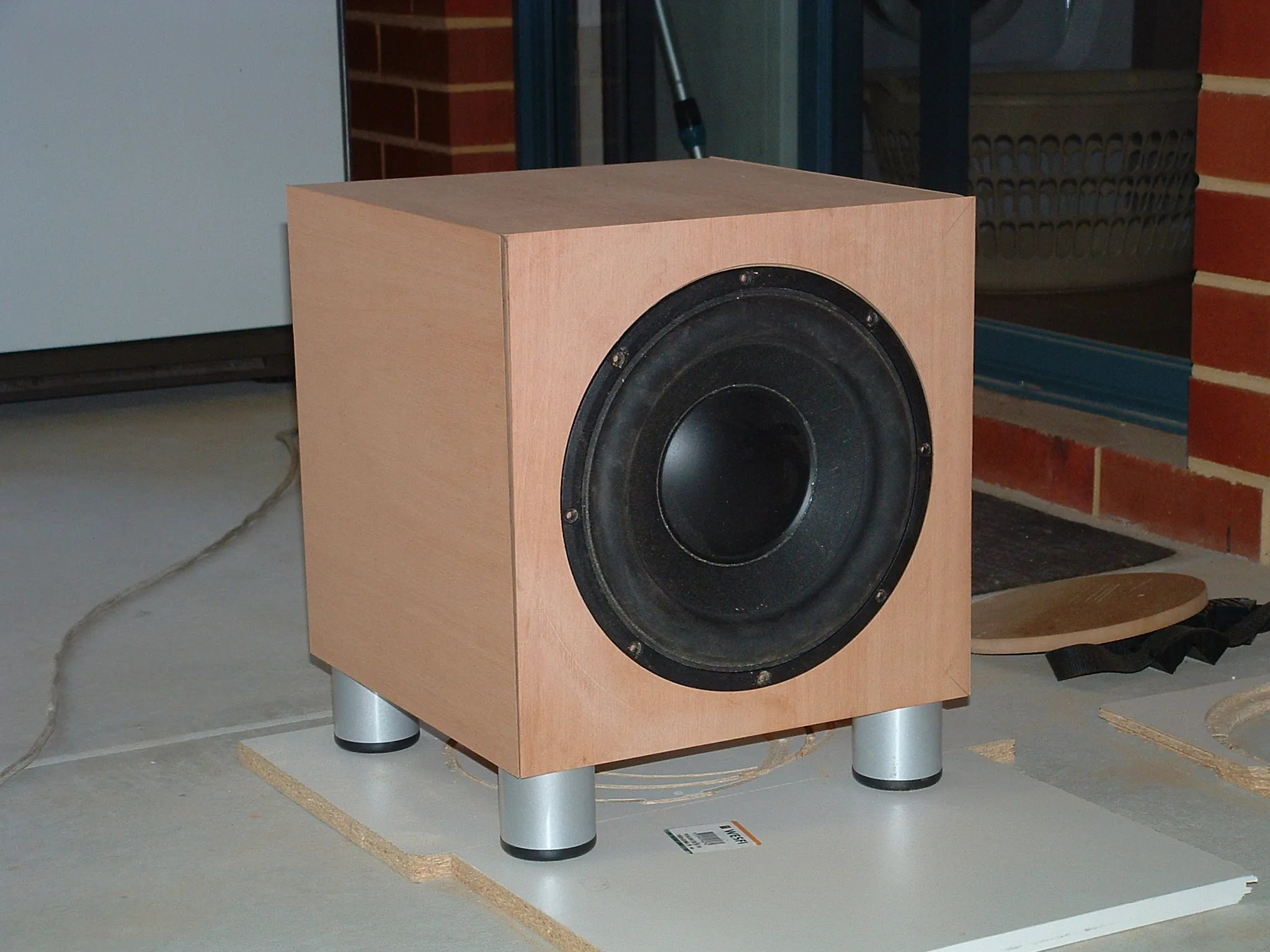
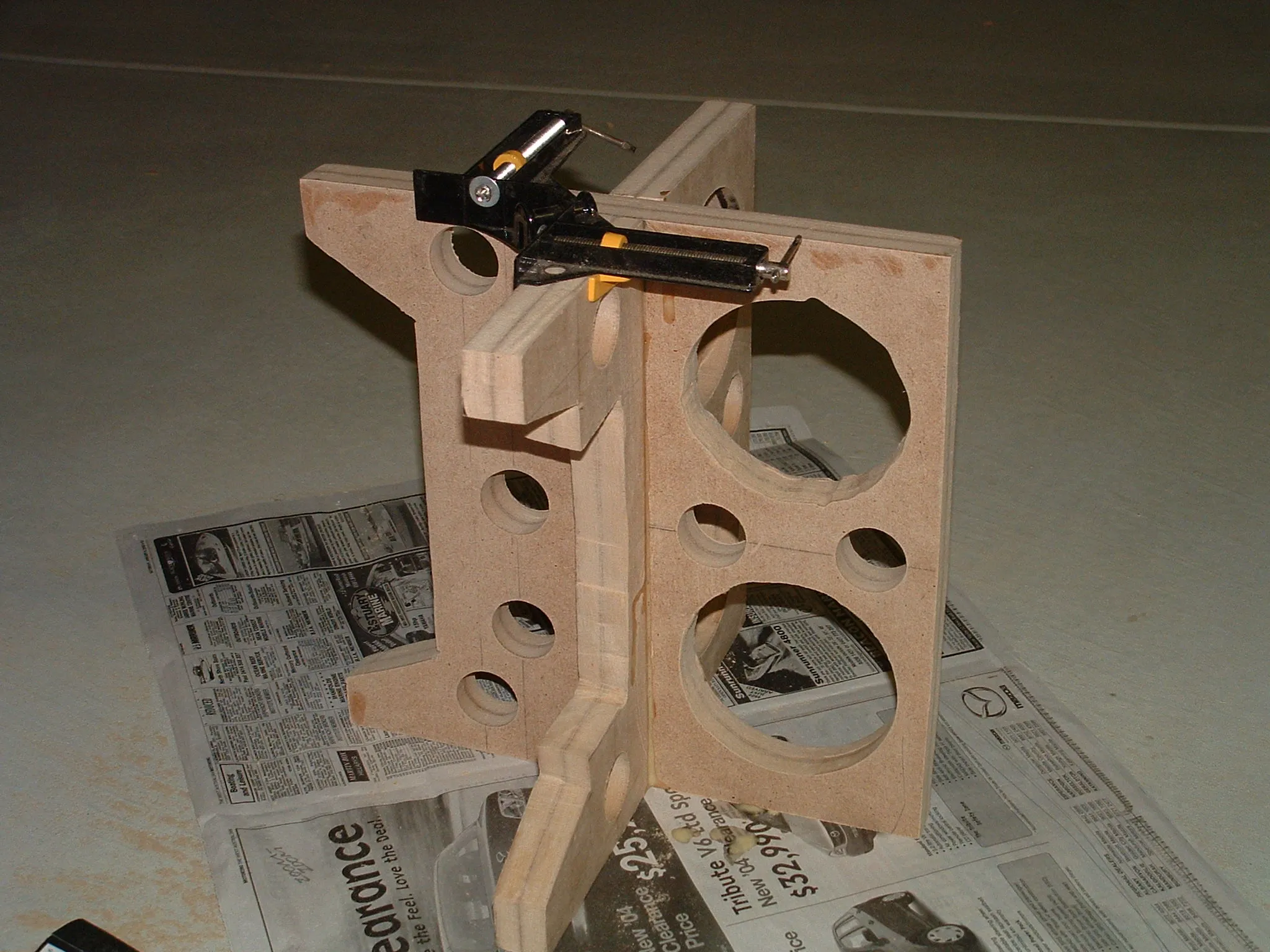
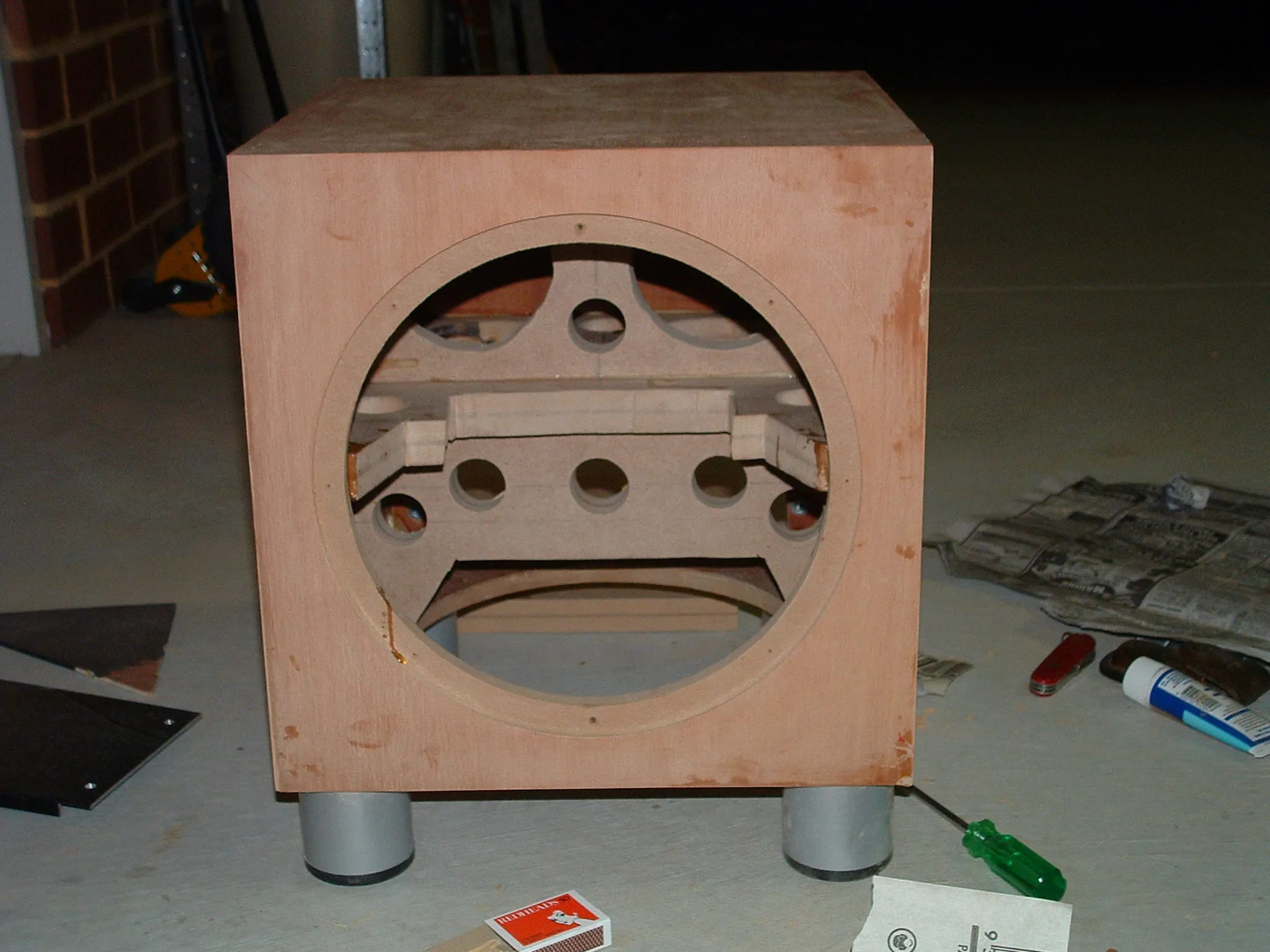
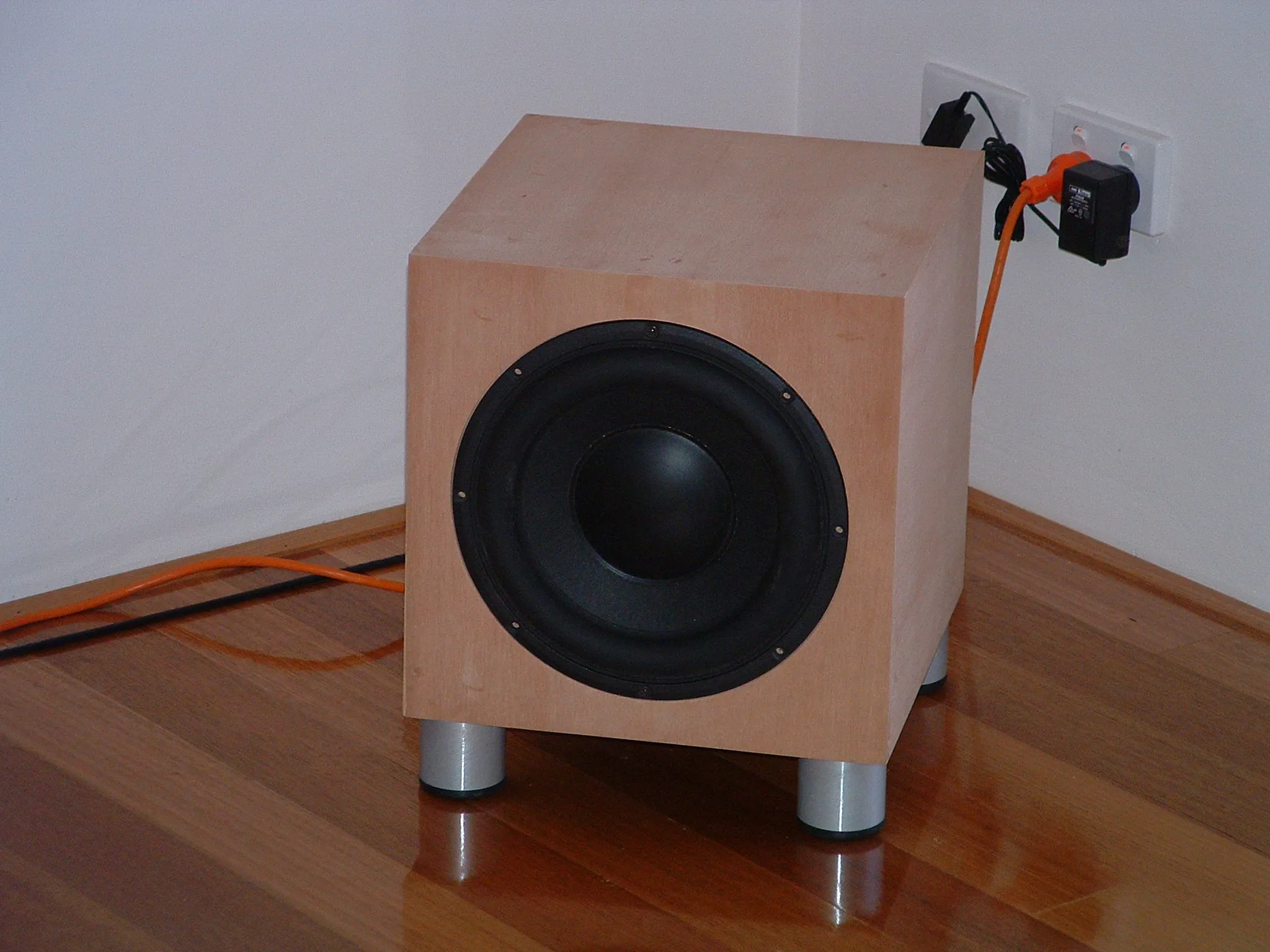
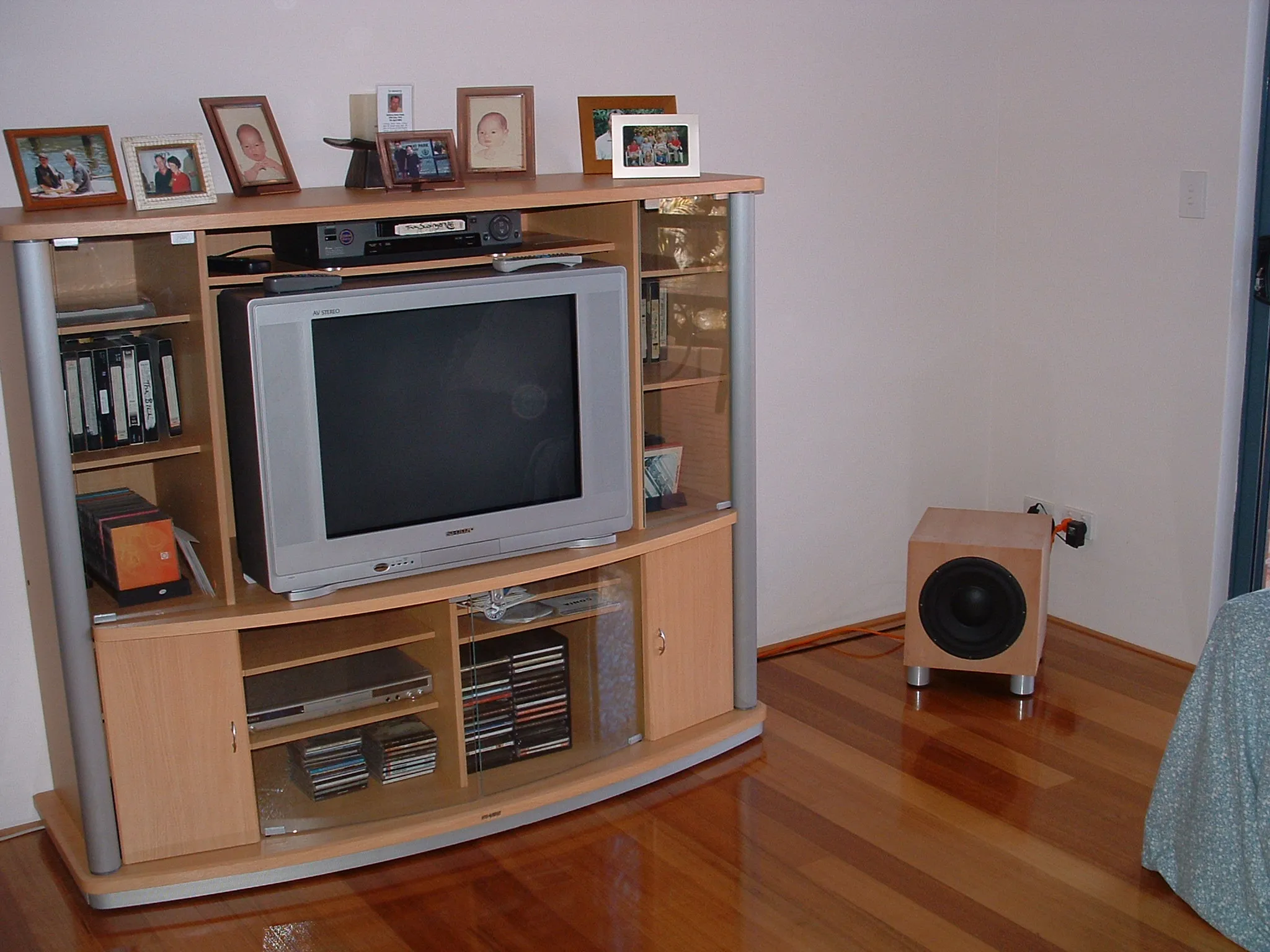
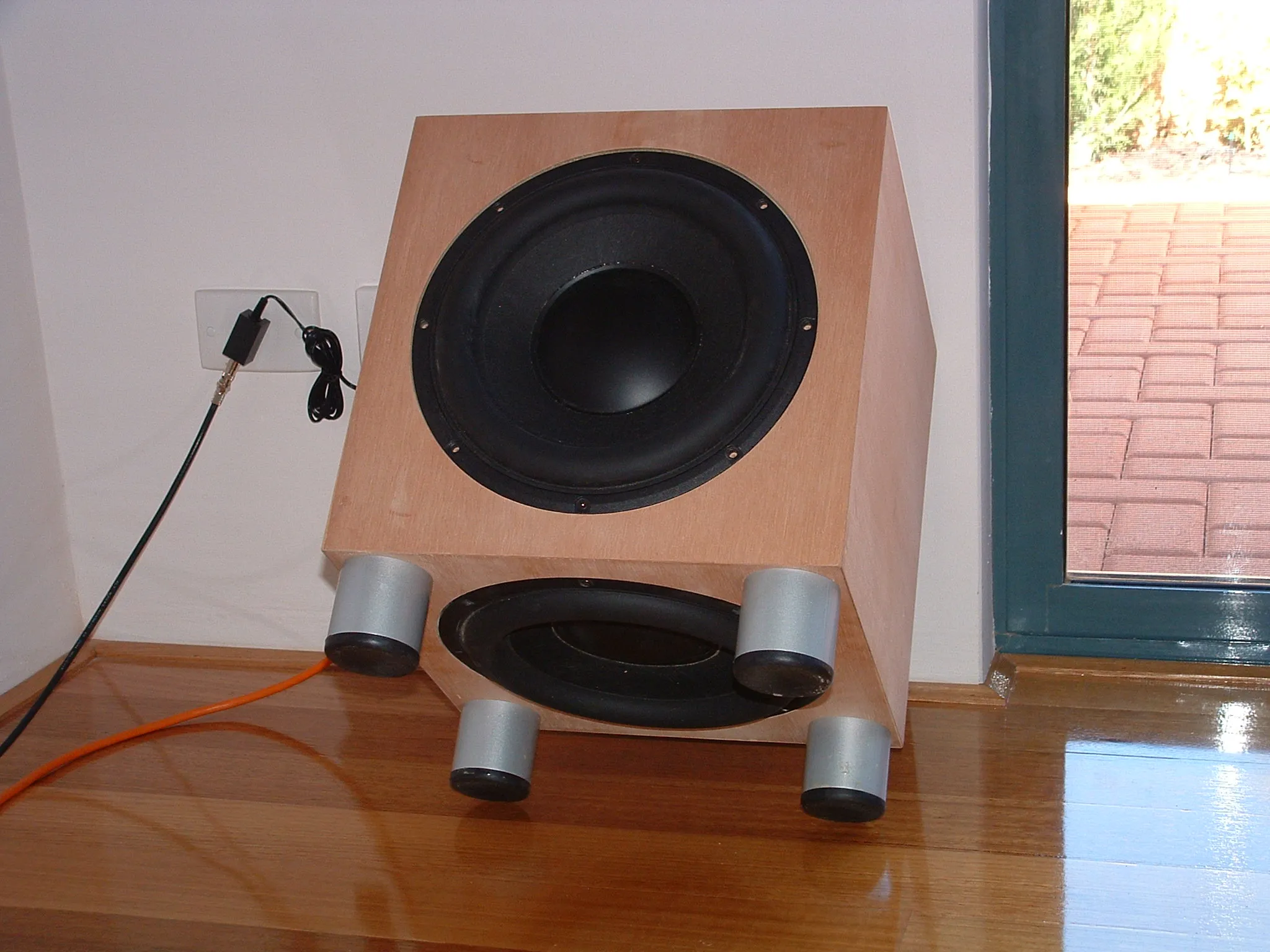
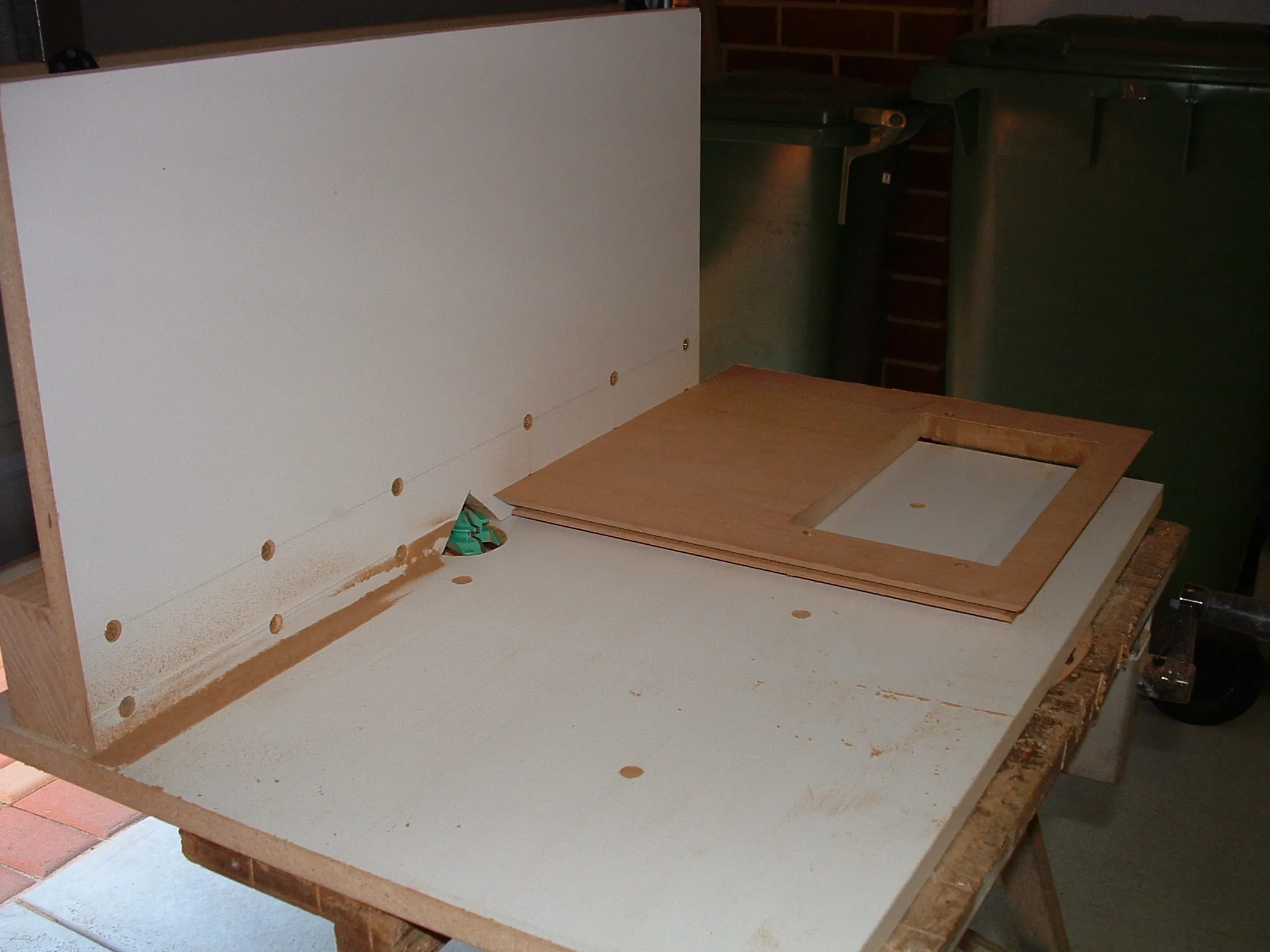
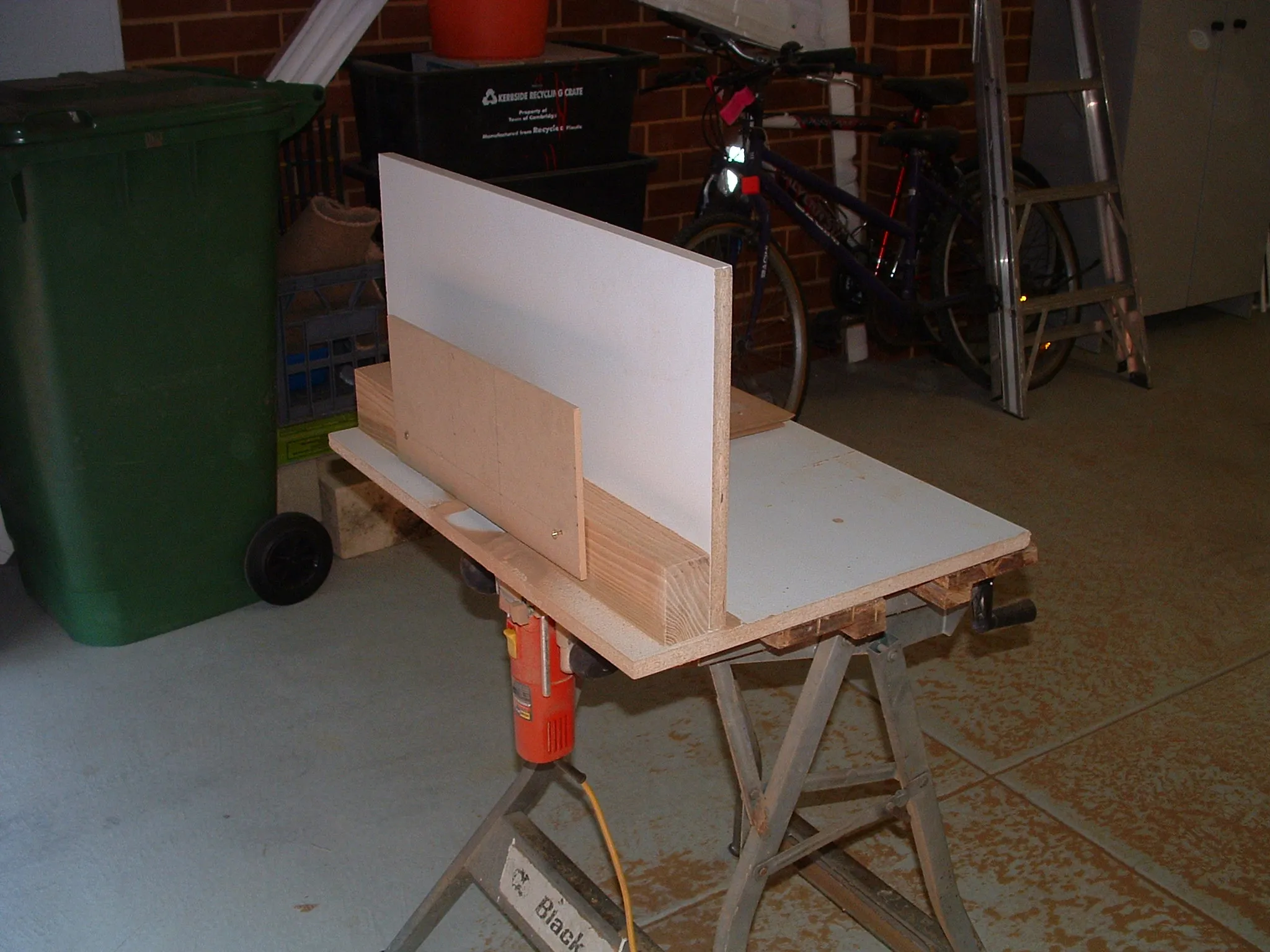
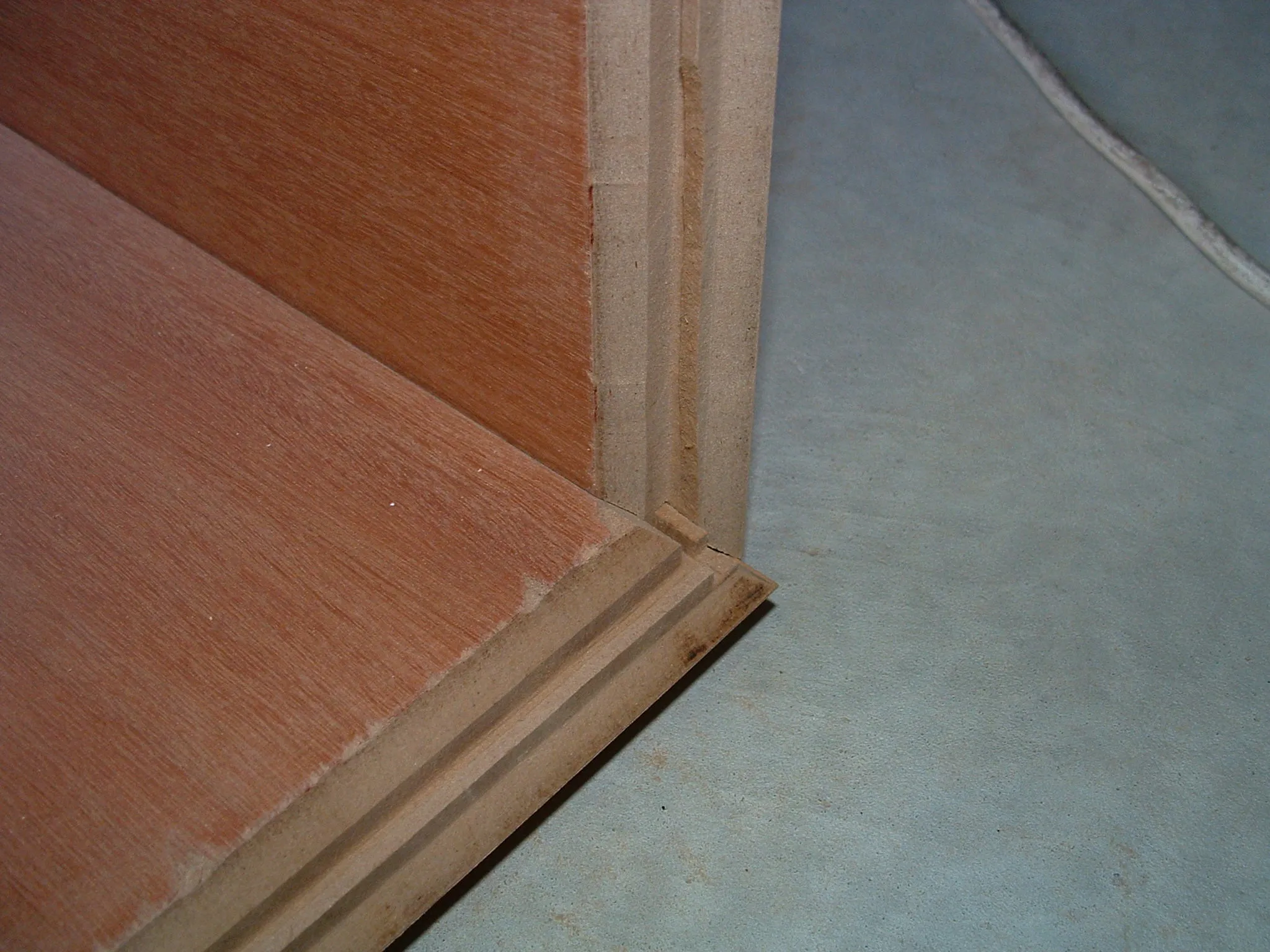
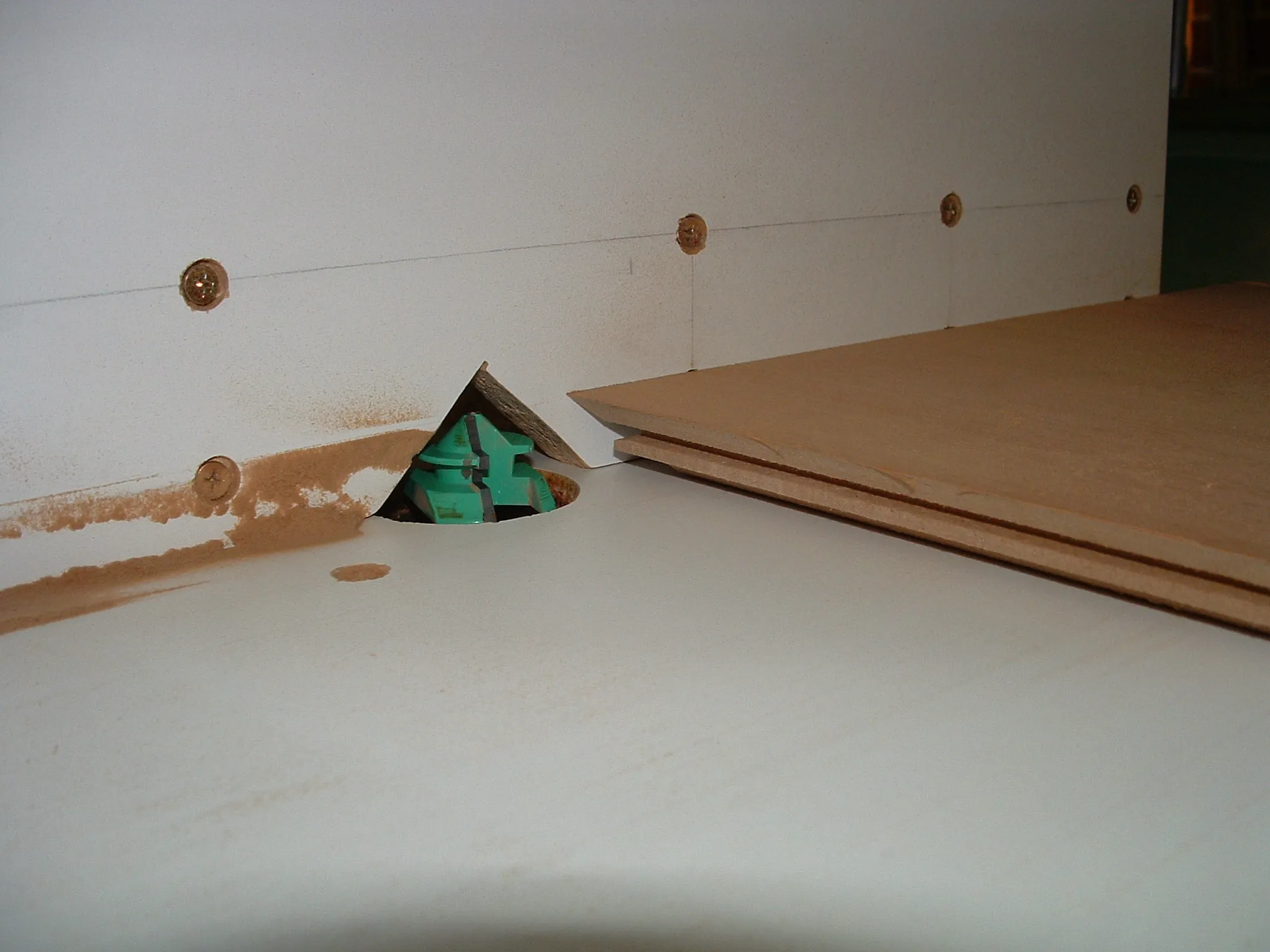
Lock Miter Joint Routing
References
Last modified: 17 Apr 2026